How CrossCheck works
From your question to a verified answer — in six steps
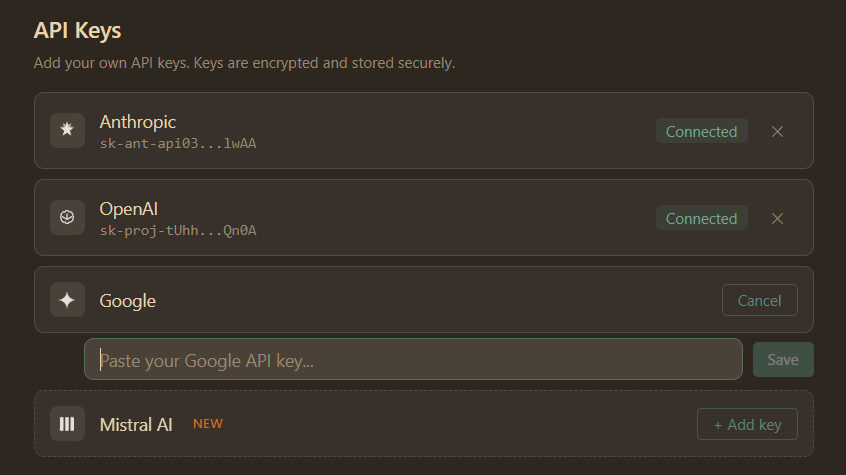
Choose your models
Two ways to get started
BYOK (bring your own keys): Add API keys for Claude, GPT, Gemini, DeepSeek, Mistral — your keys, $0 markup. Keys are encrypted and never stored in plain text.
Managed: Skip setup — just pick which models to use. We handle the AI infrastructure. No API keys needed.
Ask your question
Paste any prompt
Type or paste the same question you'd ask ChatGPT. Pick which models to verify with. Choose Quick or Standard analysis depth — longer content takes more time, but you see progress in real time.

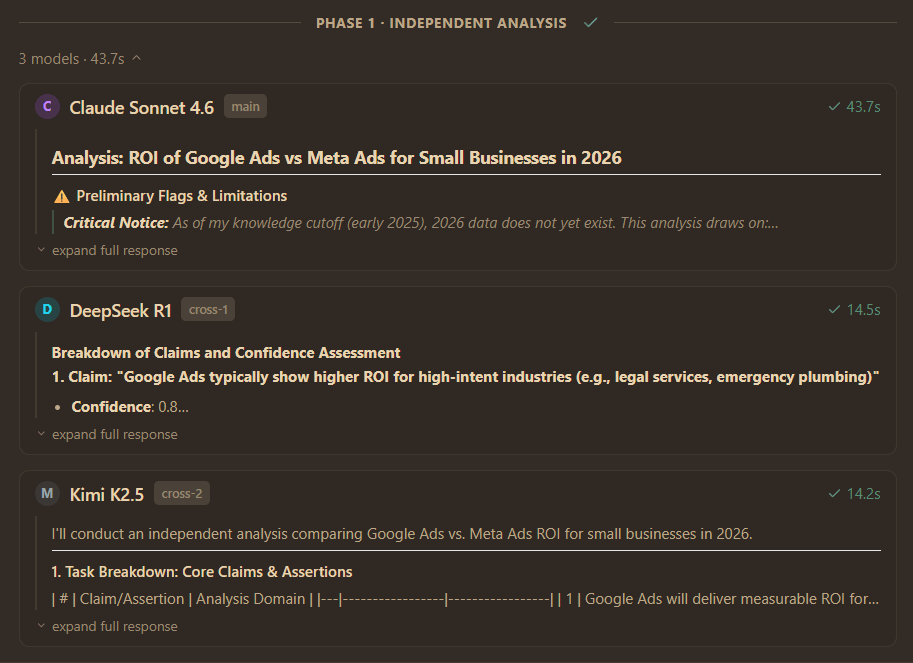
Models analyze independently
Phase 1 — blind peer review
Each model answers your question separately. No model sees another's answer — independent analysis, like blind peer review. You see each response appear in real time with timing and cost.
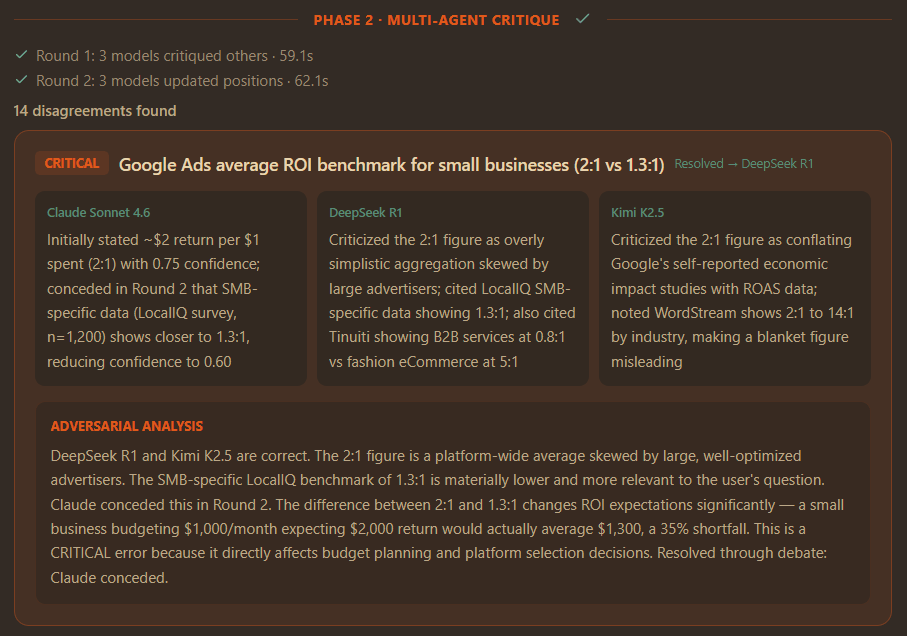
Errors surface through debate
Phase 2 — multi-agent critique
Models critique each other's answers across two rounds. Disagreements are flagged by severity — from minor nuances to critical errors like fabricated statistics or misleading benchmarks. Each model's position is shown side by side.
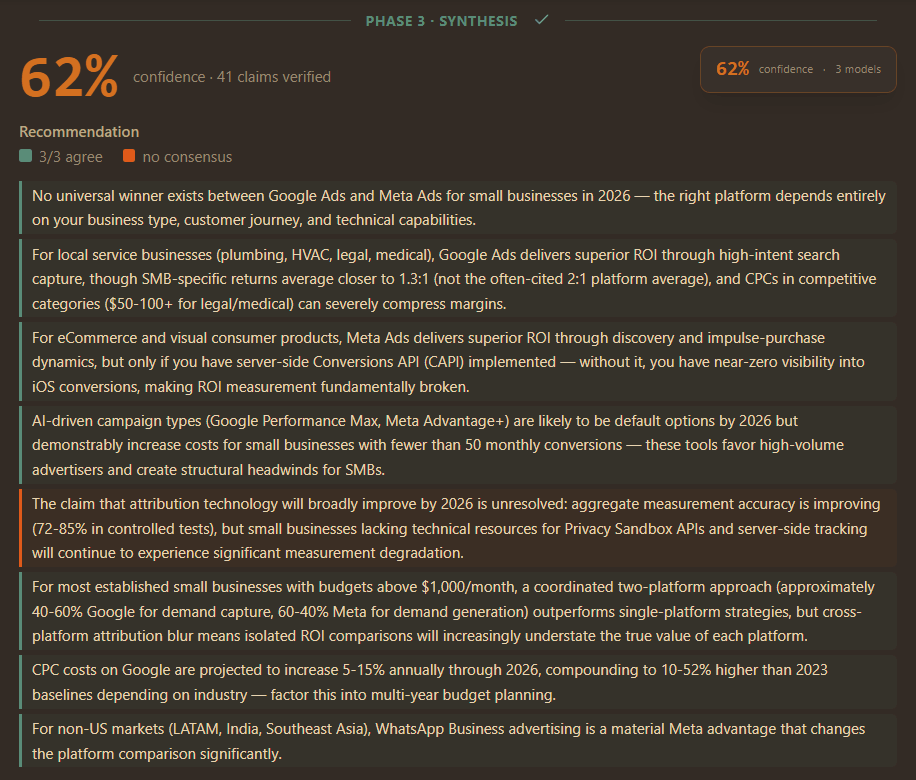
Get your Confidence Report
Phase 3 — synthesis
All findings are synthesized into a confidence score with actionable recommendations. See what all models agree on, where they diverge, and what you should do about it. Points of consensus are highlighted in green, unresolved disputes in amber.
See what was caught
Concrete harm prevented
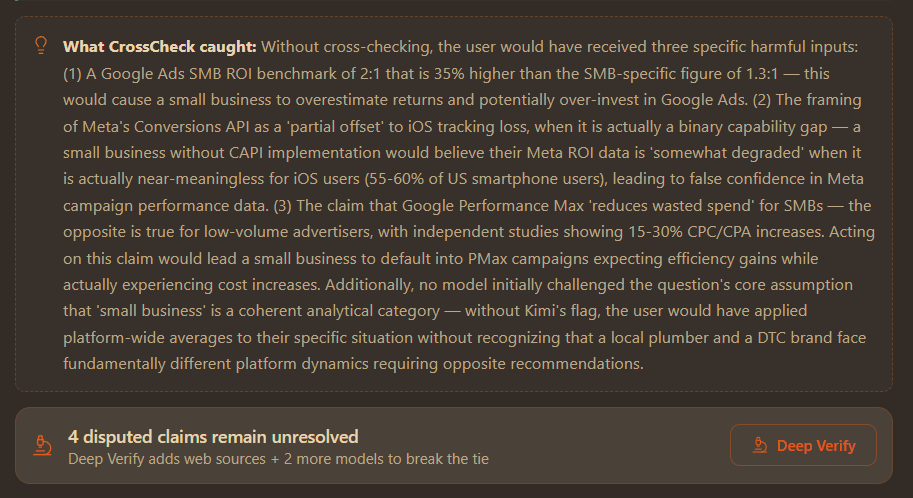
The "What CrossCheck caught" summary shows exactly what would have gone wrong without cross-verification — misleading benchmarks, fabricated confidence in broken tracking, tools that increase costs for small businesses despite claiming otherwise.
Below that, the full synthesis report breaks down every verified claim, consensus point, and disputed finding in detail — your complete audit trail.
Unresolved disputes? Run Deep Verify — it adds web sources and more models to break the tie. Export the full report as PDF to share with your team or clients.
Unlike single-model AI tools, CrossCheck uses adversarial analysis — models challenge each other to surface errors you'd never catch alone.